


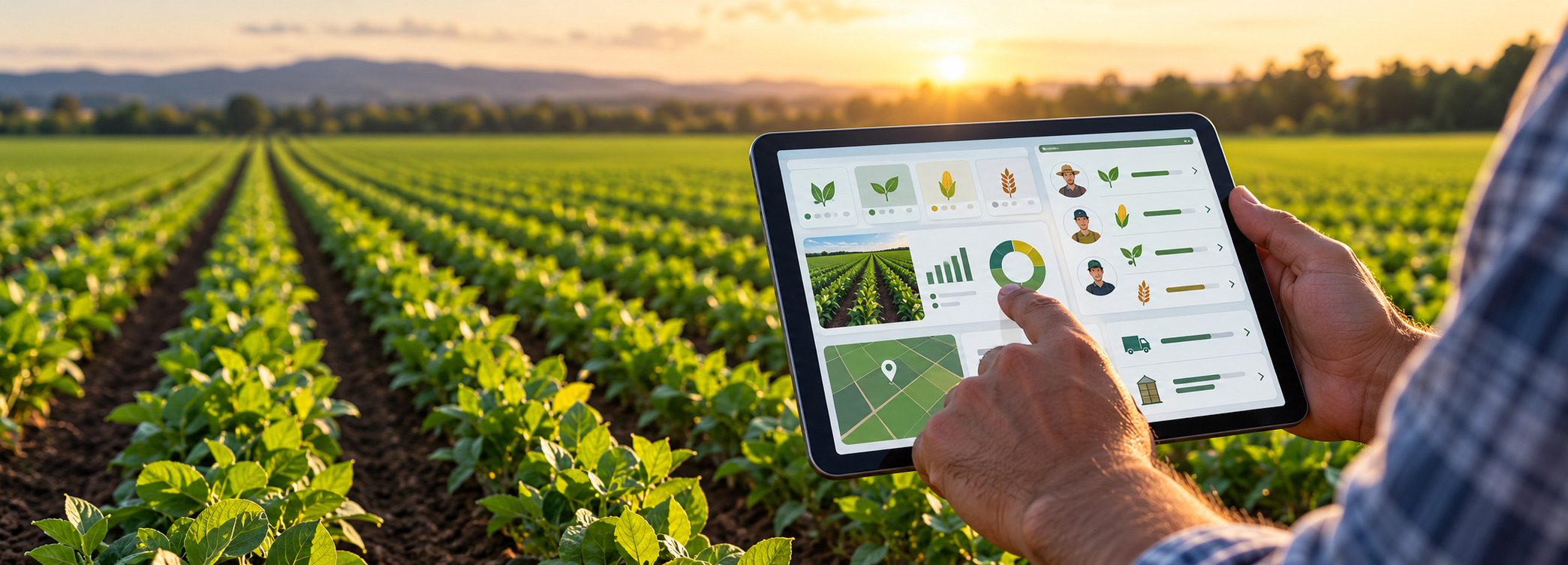
Agribusinesses often source crops, inputs, packaging, and other materials from multiple farms and suppliers. Spreadsheets, messages, and disconnected records can create gaps in procurement visibility. Agricultural procurement software brings these activities into a structured digital workflow, helping teams plan purchases, manage supplier information, track orders, and coordinate sourcing more efficiently. This article explains how procurement technology works, its key benefits, important features, and what agribusinesses should consider before choosing a solution.
What Is Digital Agricultural Procurement Technology?
A digital procurement system helps agribusinesses plan, execute, and monitor purchases of farm produce, agricultural inputs, and related materials from multiple suppliers or growers.
Instead of maintaining separate records for sourcing, supplier details, purchase orders, quantities, prices, and deliveries, teams can manage these processes through connected workflows. This gives teams a clearer view of requirements, sourcing progress, pending work, and procurement issues.
How Does Agricultural Procurement Software Work?
The software connects procurement planning with supplier and purchasing activities. A typical workflow includes:
- Demand planning: Teams estimate crop, input, packaging, or material requirements based on production and business schedules.
- Supplier sourcing: Procurement teams identify suitable growers, vendors, or suppliers and maintain their relevant records.
- Quotation and price management: Teams can compare offered prices, quantities, specifications, and other purchasing conditions.
- Purchase orders: Approved requirements can be converted into structured purchase orders with agreed quantities and terms.
- Collection and delivery tracking: Procurement teams monitor expected quantities, pickup or delivery schedules, and received materials.
- Record management: Supplier, transaction, quality, and procurement records remain organized for reporting and operational follow-up.
This workflow can reduce fragmented communication and give procurement teams a more consistent way to coordinate sourcing activities.
Key Features of Agricultural Procurement Software
An effective agriculture sourcing management software solution should reflect agricultural procurement realities rather than generic purchasing workflows.
Supplier Management
An agricultural supplier management software platform can maintain supplier profiles, sourcing locations, contact information, product categories, transaction history, and relevant documentation. Centralized records make it easier to identify active suppliers and review previous procurement activity.
Procurement Planning
An agri procurement planning system helps teams translate expected requirements into sourcing plans. Planners can organize requirements by crop, location, season, supplier, quantity, or procurement period, depending on the business model.
Purchase and Order Tracking
A farm produce procurement system can connect planned requirements with purchase orders and receipts. This helps teams compare planned quantities with ordered and received quantities, making shortfalls or delays easier to identify.
Supplier and Transaction Visibility
Procurement teams may also need visibility into historical purchases, pricing, quantities, delivery performance, and product records. A centralized platform can bring these details together for operational review.
Benefits for Agribusinesses
1. Better Sourcing Visibility
When procurement data is spread across spreadsheets, calls, emails, and paper records, teams may struggle to understand the current sourcing position. A centralized system provides a more consistent view of requirements, suppliers, orders, and receipts.
2. More Structured Supplier Coordination
A digital supplier workflow gives procurement teams a shared record of supplier information and transactions. This can make follow-ups more organized and reduce dependency on individual employees’ personal records.
3. Improved Procurement Planning
Agribusinesses often deal with seasonal supply, changing availability, multiple collection points, and fluctuating requirements. A farm procurement management platform can help teams organize sourcing plans around these operational conditions.
4. Stronger Traceability of Procurement Records
Procurement records can connect suppliers and sourcing activities with purchased products, quantities, dates, and locations. When integrated with broader farm and supply-chain systems, this information can support downstream traceability and reporting.
5. Faster Operational Reporting
Instead of manually consolidating multiple spreadsheets, teams can use dashboards and reports to review procurement status. Useful views may include pending orders, supplier activity, quantity variance, procurement by location, and outstanding deliveries.
Digital Procurement vs. Manual Procurement
Manual procurement may work for small operations, but complexity increases as suppliers, farms, products, locations, and transactions grow.
| Procurement Area | Manual Approach | Digital Approach |
| Supplier records | Multiple files or contacts | Centralized profiles |
| Requirement planning | Spreadsheets | Structured procurement plans |
| Order tracking | Manual updates | Digital status tracking |
| Reporting | Data consolidation | Dashboards and reports |
| Documentation | Paper or separate folders | Organized digital records |
The goal is to create connected processes that reduce duplicate data entry and improve visibility.
How to Choose the Right Solution
Before selecting agricultural purchasing software, agribusinesses should evaluate how well the system fits their procurement model.
Consider these factors:
- Supplier and grower management: Can the platform maintain relevant supplier profiles and transaction histories?
- Multi-location operations: Can teams manage sourcing across farms, collection centers, warehouses, or regions?
- Procurement workflows: Can requirements, approvals, purchase orders, receipts, and exceptions be connected?
- Integration: Can procurement data connect with farm operations, inventory, ERP, finance, or traceability systems?
- Mobile usability: Can field and procurement teams capture information when working away from the office?
- Reporting: Are dashboards and reports available for quantities, suppliers, orders, and procurement status?
- Scalability: Can the system support additional crops, suppliers, locations, and transaction volumes as operations expand?
A good evaluation should focus on actual workflows rather than the number of features listed on a product page.
Common Procurement Challenges the Software Can Address
Agribusiness procurement teams commonly face:
- Incomplete or outdated supplier information
- Difficulty matching supply with planned demand
- Limited visibility into order status
- Duplicate or inconsistent records
- Delayed communication between field and procurement teams
- Manual reconciliation of ordered and received quantities
- Difficulty consolidating procurement data across locations
Technology cannot remove supply uncertainty, but it can make procurement information more structured and accessible.
How Verdnt Supports Connected Agribusiness Operations
Verdnt provides a modular environment for managing farm and supply-chain operations, with capabilities that can connect procurement information with farm, inventory, financial, and traceability records.
For agribusinesses managing distributed sourcing networks, connecting procurement with Farm Management Software, Agri ERP Software, Agri Supply Chain Management Software, and Supply Chain Traceability Software can create a more connected flow of operational data.
This approach can help organizations move beyond isolated purchasing records toward coordinated management of farms, suppliers, products, and supply-chain activities.
Conclusion
Agricultural procurement software can help agribusinesses organize sourcing, supplier information, purchasing workflows, and procurement records in one connected environment. Its value becomes more apparent when operations involve multiple farms, suppliers, locations, products, and seasonal requirements.
The right system should support practical procurement processes, provide useful reporting, work across operational locations, and integrate with related farm, ERP, inventory, and traceability functions. For growing agribusinesses, Verdnt offers a modular approach that can connect procurement-related workflows with wider farm and supply-chain operations, helping teams build more structured and visible processes. Explore more to see how Verdnt can support connected agricultural operations.
Frequently Asked Questions
What does procurement software manage?
It can manage supplier records, sourcing requirements, purchase orders, quantities, pricing information, deliveries, procurement documentation, and reporting across agricultural operations.
Who can use procurement software in agribusiness?
Farm enterprises, processors, procurement teams, contract farming organizations, plantations, food businesses, and distributed grower networks can use it to coordinate sourcing activities.
Can procurement software manage multiple suppliers?
Yes. A centralized platform can organize supplier profiles, sourcing locations, transactions, orders, and related records, helping teams manage larger supplier networks more systematically.
Can it connect procurement with farm operations?
Yes. When integrated with farm management and ERP systems, procurement information can connect with crop, inventory, financial, and traceability workflows for broader operational visibility.
What should agribusinesses check before buying procurement software?
Evaluate supplier management, procurement workflows, mobile access, integrations, reporting, multi-location support, scalability, data security, and the platform’s ability to match your actual sourcing processes.
Does procurement software replace procurement teams?
No. It supports procurement teams by organizing information, automating parts of the workflow, improving visibility, and reducing repetitive administrative work. Decisions still require human oversight.

Leave A Reply